Understanding the Refrigeration Cycle of Chillers | Industrial Cooling Guide | MIRAI INTEX

Introduction
The refrigeration cycle is the quiet engine that keeps modern industry running. The ability to reliably and continuously transfer heat is the basis for many important tasks, such as keeping life-saving drugs safe, making semiconductors, and keeping buildings comfortable. For engineers, facility managers, and technical decision-makers, knowing this cycle inside and out is not just for school; it's necessary for picking the right system, fixing problems, and getting the best total cost of ownership.
This guide looks at the chiller refrigeration cycle from the ground up, focusing on how it works in industrial and process cooling. Comfort cooling and industrial cooling are based on the same thermodynamic principles, but their goals are very different. HVAC comfort cooling is all about keeping people comfortable. It usually does this by taking out sensible and latent heat to keep rooms at 22–24°C with a fair amount of accuracy. But industrial chiller refrigeration cycle have much stricter requirements for temperatures, machinery, reactions, and products. For example, they need to be able to control the temperature to within fractions of a degree, run continuously under different loads, and be reliable for years instead of just seasons.
What Is a Refrigeration Cycle
At its most basic level, a refrigeration cycle is a technique to transport heat in a controlled way. It doesn't make "cold," which is just the lack of heat. The cycle doesn't cool things down; instead, it removes heat from something that needs to be cooled and delivers it to something else, like air or water. This difference is very important: refrigeration chillers are heat pumps that transport thermal energy against its natural gradient by adding work from outside sources.
The vapor compression cycle—the dominant method in refrigeration chillers—exploits the relationship between a refrigerant's pressure and its phase-change temperature. By manipulating pressure through mechanical work, engineers can cause refrigerants to evaporate at low temperatures (absorbing heat) and condense at higher temperatures (rejecting heat). This closed-loop process, governed by the laws of thermodynamics, enables continuous cooling with remarkable efficiency when properly designed
Core Objective of Chiller Refrigeration
The main tasks of every chiller refrigeration cycle are to take in and give out heat. Heat moves from the process fluid (water, glycol, or another coolant) into the boiling refrigerant in the evaporator. The same heat, plus the heat from the compressor activity, is sent to the surrounding environment or the cooling water circuit in the condenser.
For industrial uses, it is very important to keep the temperature steady. To make equipment last longer, you need to avoid heat cycling, which puts stress on the equipment by making it expand and shrink. To keep reaction kinetics or material properties stable, process stability needs heat removal rates that stay the same. The quality of a product, whether it's freeze-dried drugs or injection-molded plastics, depends on the ability to replicate the same heat circumstances. The refrigeration cycle has to do more than just cool things down; it has to do it in a way that is consistent and can be controlled in all situations.
Main Components of a Chiller System
Every mechanical refrigeration system cycle comprises four essential refrigeration components: evaporator, compressor, condenser, and expansion device. These refrigeration components form a continuous loop, each performing a distinct thermodynamic function.
Evaporator
The evaporator takes in heat from the thing that is being cooled. Refrigerant comes in as a low-quality mixture on the low-pressure side and boils as it picks up heat. In industry, shell-and-tube evaporators are strong because process fluid flows through tubes. Plate heat exchangers are more efficient in small spaces where close approach temperatures are needed.
Compressor
The compressor is the heart of the chiller refrigeration cycle, performing two critical functions: it increases refrigerant pressure (and thus temperature) to enable condensation at ambient conditions, and it circulates refrigerant throughout the system by maintaining the pressure differential between evaporator and condenser.
Industrial refrigeration chillers employ several compressor architectures. Reciprocating compressors offer proven reliability across moderate capacities. Screw compressors excel in continuous duty with variable loads. Centrifugal compressors dominate large-capacity applications, particularly in water-cooled plants. Scroll compressors provide efficient operation in smaller systems. Each type presents distinct characteristics regarding efficiency, turndown capability, and maintenance requirements
Condenser
The condenser sends the combined heat from the process and the work of the evaporator condenser compressor into the air. Air-cooled condensers use air from the outside instead of water, so they don't use any water. Water-cooled shell-and-tube designs work better and condense at lower temperatures, but they need more infrastructure and water treatment.
The device makes the pressure difference by controlling the flow of refrigerant from high to low pressure to match the load on the evaporator. Thermal expansion valves change based on how hot the outlet is. Electronic expansion valves give you better control over multiple inputs for the best performance under different loads. This stops liquid slugging and makes sure that the whole surface is used.
Step-by-Step Refrigeration Cycle Explained
The refrigeration cycle is like a loop, and each step gets the refrigerant ready for the next one. By following these procedures in succession, you can witness how the machine cools down.
Step 1: Evaporation
In the refrigeration cycle, the evaporator gets liquid refrigerant that is at a low pressure and temperature, usually a few degrees lower than the temperature of the fluid that is being processed. This component is one of the key refrigeration components in any vapor compression cycle. The process fluid warms up as it passes through the evaporator, and this heat moves to the refrigerant, which makes it boil. This process of evaporation takes in latent heat, which is usually between 150 and 250 kJ/kg, depending on the refrigerant. However, it doesn't raise the temperature. The vapor that comes out of the evaporator is either fully saturated or a little too hot. It has taken the right amount of heat from the process and is ready to go to the evaporator condenser compressor in the refrigeration system cycle.
At this time, it's really crucial to be stable. Changes in the pressure of the evaporating liquid might modify the temperatures of the process, which could impact the quality of the result or how the equipment works. This balance is essential for the performance of refrigeration chillers and the overall chiller refrigeration cycle, ensuring the evaporator condenser compressor work in harmony to maintain precise temperature control
Step 2: Compression
The compressor, a vital component in the vapor compression cycle, takes low-pressure vapor from the evaporator and elevates its pressure by moving it around until it reaches the level needed for condensation. This process uses energy, usually 0.2–0.4 kW per kW of cooling for systems that perform properly, and it always loses some energy. The refrigerant's qualities, the compressor's design, and the conditions in which it works all affect how well it compresses.
One of the best things you can do to make yourrefrigeration system cycle work better is to get the correct compressor. If you make it too huge, it won't work right and won't control humidity well. It won't be able to manage peak loads if you make it too small. This selection is critical for optimizing all refrigeration components downstream.
Step 3: Condensation
The vapor goes into the condenser at a high temperature and pressure. It touches surfaces that are kept cool by air or water from the outside, completing the cycle between the evaporatorcondenser compressor. First, the vapor cools down to the saturation temperature. Before it departs, the liquid that comes out may cool down a little bit, preparing it to re-enter the evaporator and continue the refrigerationcycle.
The choice of heat rejection media has an impact on the environment. Water-cooled systems, often used in larger refrigeration chillers, utilize water and may need chemicals to perform right. When it's hot outside, air-cooled systems consume more fan energy and have less capacity. When building a system, designers need to consider these elements in light of how well it will work in the area and how efficient it needs to be, ensuring the chiller refrigeration cycle operates effectively under local conditions.
Step 4: Expansion
The expansion device lets high-pressure liquid refrigerant through, which makes the pressure drop quickly. This throttling mechanism is isenthalpic, which implies that no heat is lost or gained. Instead, some of the liquid converts into gas, which cools the rest of the liquid down to the temperature of the evaporator. The evaporator makes a two-phase mixture that is normally 20–30% vapor by mass. This mixture is ready to absorb heat and complete the cycle.
Refrigerants Used in Chiller Cycles
Refrigerant selection profoundly impacts refrigeration system cycle performance, safety, and regulatory compliance. The ideal refrigerant exhibits suitable thermodynamic properties, chemical stability, low toxicity, non-flammability, and minimal environmental impact—characteristics that often conflict, requiring careful compromise.
Synthetic Refrigerants and Regulatory Limits
Hydrofluorocarbons (HFCs) have been the most frequent approach to cool industrial environments for decades because they are very safe and work well thermodynamically. But their ability to cause global warming (GWP) has led to more and more laws. The F-Gas law in Europe and similar rules in other parts of the world are getting rid of refrigerants with high GWP. This is pushing people migrate to ones with lower GWP.
When the temperature drops below −50°C, regular refrigerants have much more problems. When vapor pressures drop below atmospheric levels, air can get in. When compression ratios go up, the system becomes less effective. Some refrigerants go close to their freezing points, which means they can't be used as much.
Natural Refrigerants and Air as Working Media
Natural refrigerants, such as ammonia (R717), carbon dioxide (R744), and hydrocarbons (R290, R600a), have little direct effect on the environment. Ammonia is very efficient, but it is also very toxic, so you have to be careful when you use it. CO₂ works at high pressures, which means it needs strong parts but allows for new cycle architectures. Propane and other hydrocarbons work well and have a low GWP, but they need safety features because they are flammable.
Air as a refrigerant (R729) is the best natural choice because it is everywhere, free, has no GWP, and is completely safe. Air-cycle technology, which has been used for a long time in aircraft pressurization and cooling, is becoming more popular in specialized industrial settings where its unique features make the thermodynamic trade-offs worth it.
Limits of Conventional Refrigeration Cycles at Ultra-Low Temperatures
The conventional vaporcompression cycle has big problems when the temperature drops below −50°C. The compression ratios get very high, frequently more than 10:1, which lowers volumetric efficiency and raises discharge temperatures. As fluids become close to freezing or have evaporator pressures below atmospheric pressure, the number of refrigerant alternatives goes down. The system's reliability goes down when the lubricating oil gets thick or separates from the refrigerant.
These limits have led to new ideas in cascade systems, where two or more refrigeration cycles work together, each employing a refrigerant that works best at its temperature range. Cascade systems work well, but they make things more complicated, add more parts, and cost more.
Alternative Approaches for Deep & Ultra-Low Cooling
Alternative thermodynamic cycles can help with applications that are challenging to deal with at low temperatures. These solutions can operate with or replace old technologies, depending on what you need.
Air-Cycle Refrigeration Concept
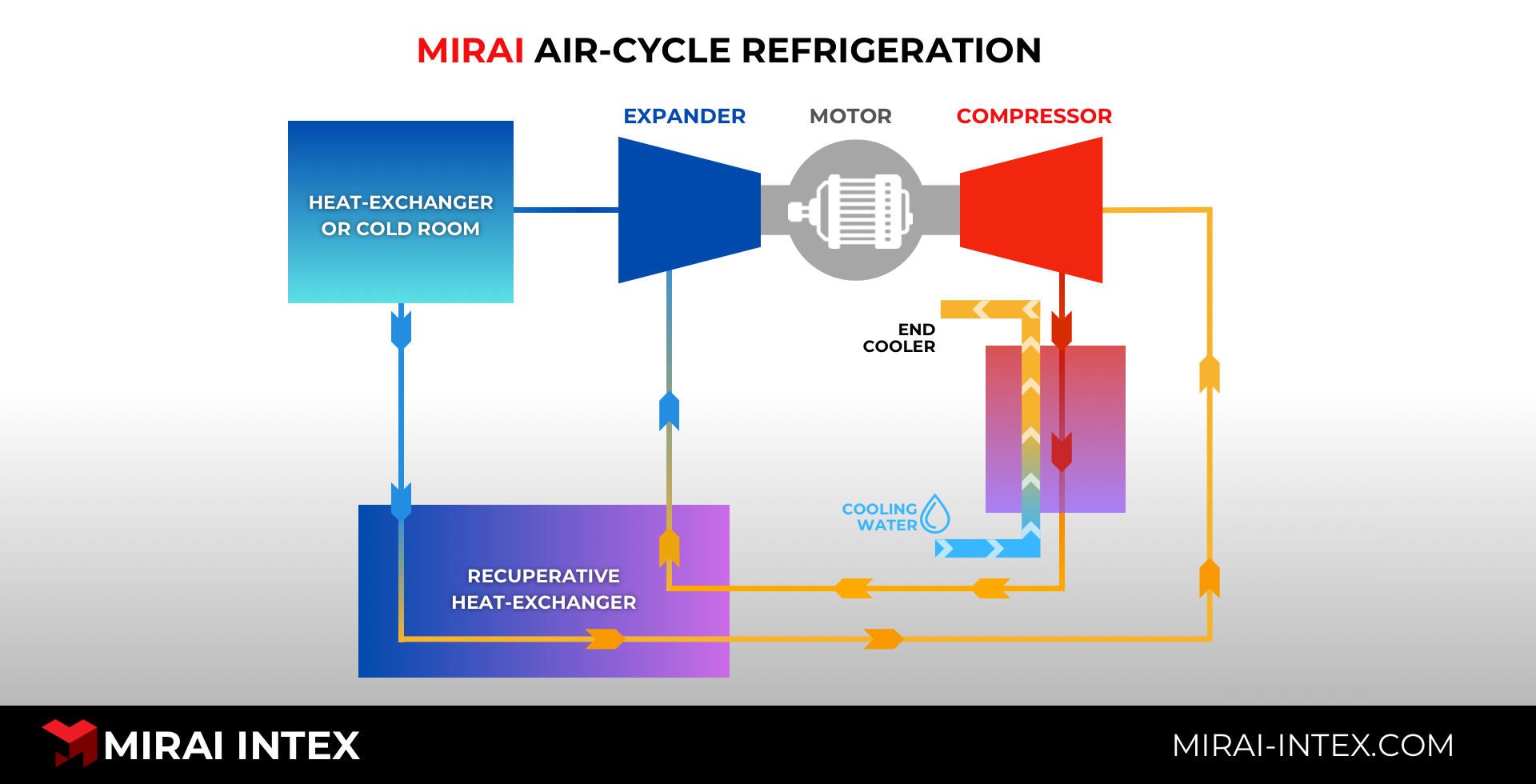
The air-cycle operates substantially differently than vapor compression because it is based on the inverted Brayton cycle. It doesn't change phases; instead, it uses air as a working fluid that is always in a gas state. A turbine compresses the air around it, cools it by exchanging heat, and then expands it. The expansion can lower temperatures to −100°C or below without the drop in efficiency that happens when vapor compression is used at very low temperatures.
Air-cycle systems have a lot of advantages. For example, they don't hurt the environment, you don't have to worry about handling or leaking refrigerant, they run without oil (using air-bearings), and they can distribute cold air straight for open-cycle uses. The method works best for tasks that need very low temperatures, like when vapor compression costs a lot of energy.
MIRAI INTEX has made air-cycle technology relevant for businesses by producing systems that can work at temperatures between −160°C and +90°C and have capacities between 10 and 150 kW. These systems use turbo compressors that are constructed to very tight tolerances, which means they perform well and reliably in a lot of different scenarios.
Where Refrigeration Cycle Choice Matters Most
The type of refrigeration technology you choose has a big impact on how well the process works, how much it costs to run, and how much it affects the environment. Different applications have different priorities:
|
Application |
Critical Requirement |
Preferred Approach |
|
Medical & pharmaceutical |
Temperature stability, reliability |
Vapor compression with precision controls |
|
Ultra-low temperature storage |
Very low temperature, uniformity |
Air-cycle or cascade systems |
|
Freeze-drying |
Precise control during sublimation |
Hybrid approaches |
|
Semiconductor manufacturing |
Vibration-free, precise control |
Oil-free technologies |
|
Food processing |
Food safety, scalability |
Proven vapor compression |
Medical & Pharmaceutical Cooling
Superconducting magnets in MRI machines need to be very stable at different temperatures. Plasma storage needs a steady temperature of −80°C. Biologics manufacturing requires exact and consistent thermal regulation. Vapor compression cycle technology is well-established, which is good for these applications. However, air-cycle technology is becoming more popular where ultra-low temperatures or sustainability are very important.
Freeze-Drying & Lyophilization
During primary drying, lyophilization depends on keeping the product temperature below eutectic points. Cycle stability has a direct effect on the rate of sublimation and the quality of the final product. The refrigeration system needs to keep the shelf temperatures steady while dealing with different amounts of heat from sublimation.
Industrial Process Cooling
Lasers create very hot, concentrated heat loads that need to be removed right away. Environmental test chambers need to quickly and repeatedly switch between very hot and very cold temperatures. Semiconductor fabrication requires cooling that doesn't cause vibrations and that can be controlled to within a few degrees. The refrigeration cycle has different needs for each application.
How Mirai Intex Integrates into Modern Refrigeration Systems
MIRAI INTEX is a technology provider at the OEM level that only sells advanced cooling modules. Our air-cycle turbo compressors and refrigeration chillers work perfectly with products made by original equipment manufacturers (OEMs).
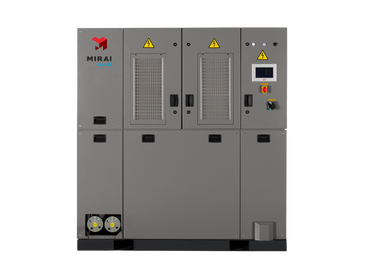
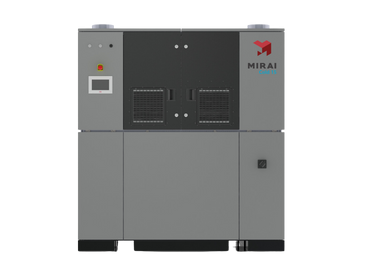
The MIRAI X CRYO, for example, can cool down to −160°C and heat up to 90°C. It does this all in one unit that uses air as a refrigerant. It doesn't use oil and has precise inverter control, which makes it a good choice for semiconductor, pharmaceutical, and specialized food processing applications. The RAC Cooling Industry gave the technology the 2024 Refrigeration Innovation of the Year award for helping to move industrial refrigeration forward.
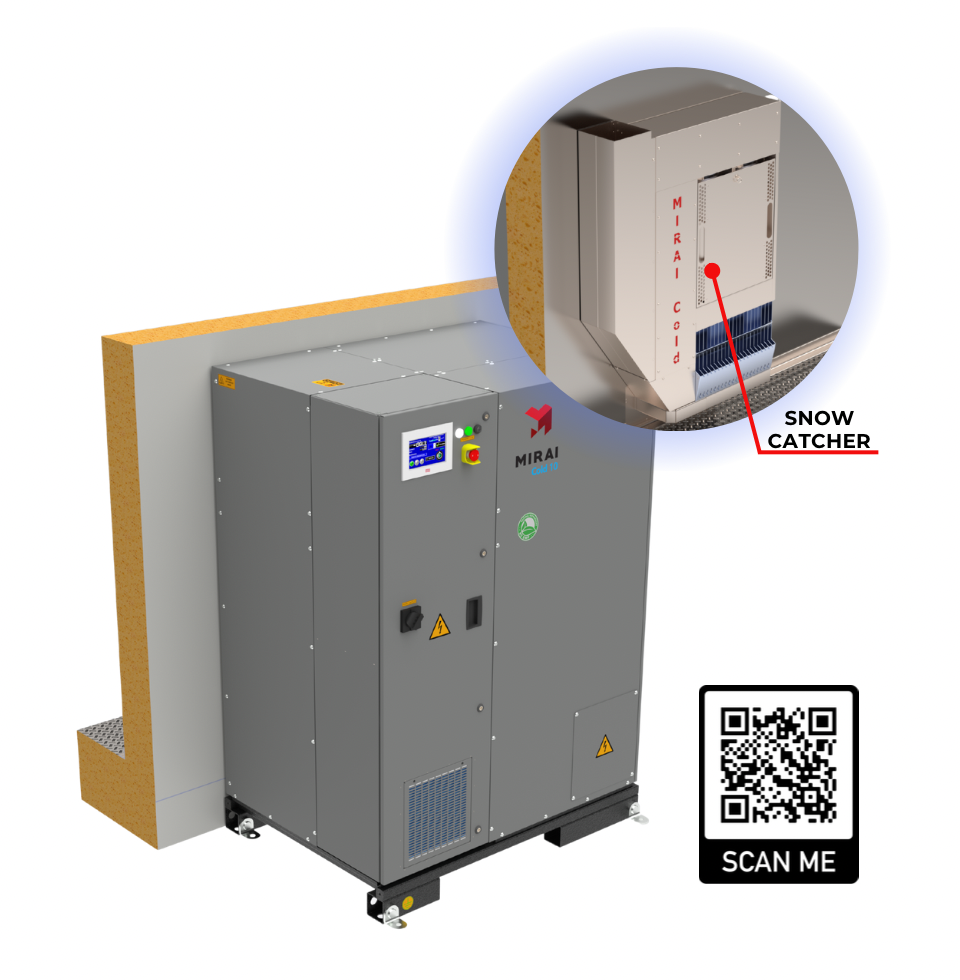
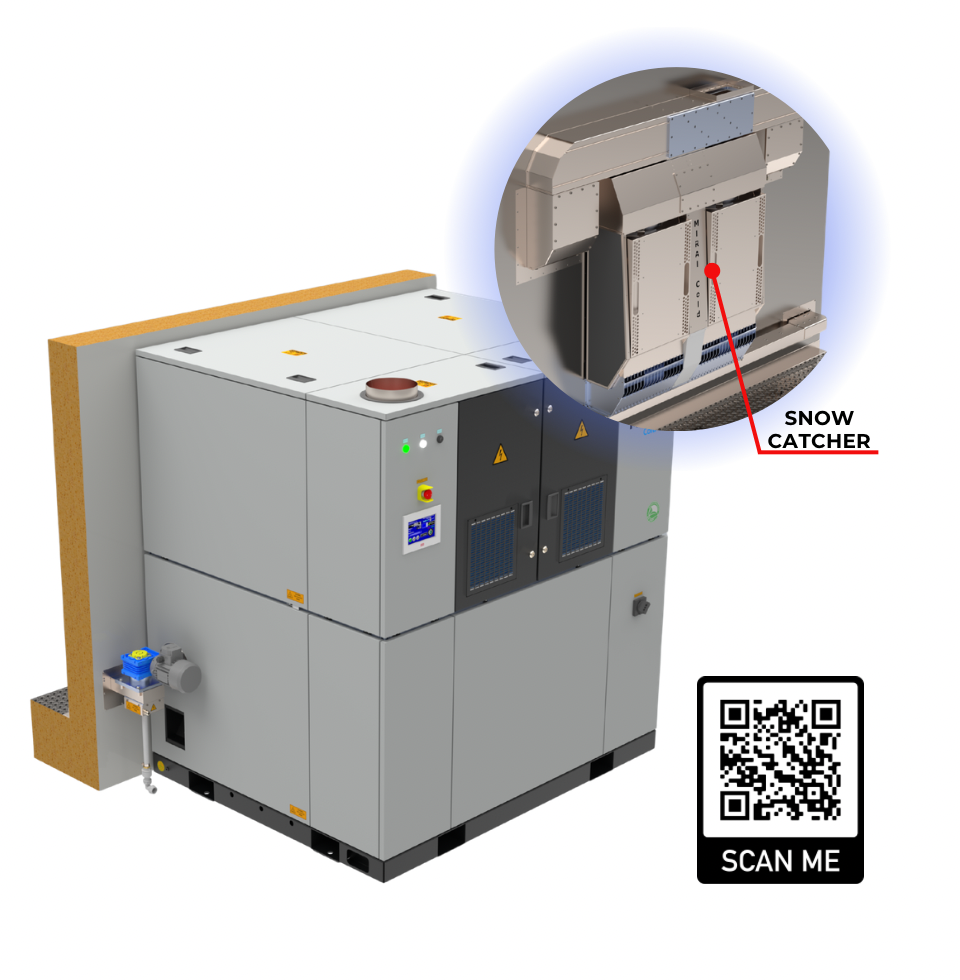
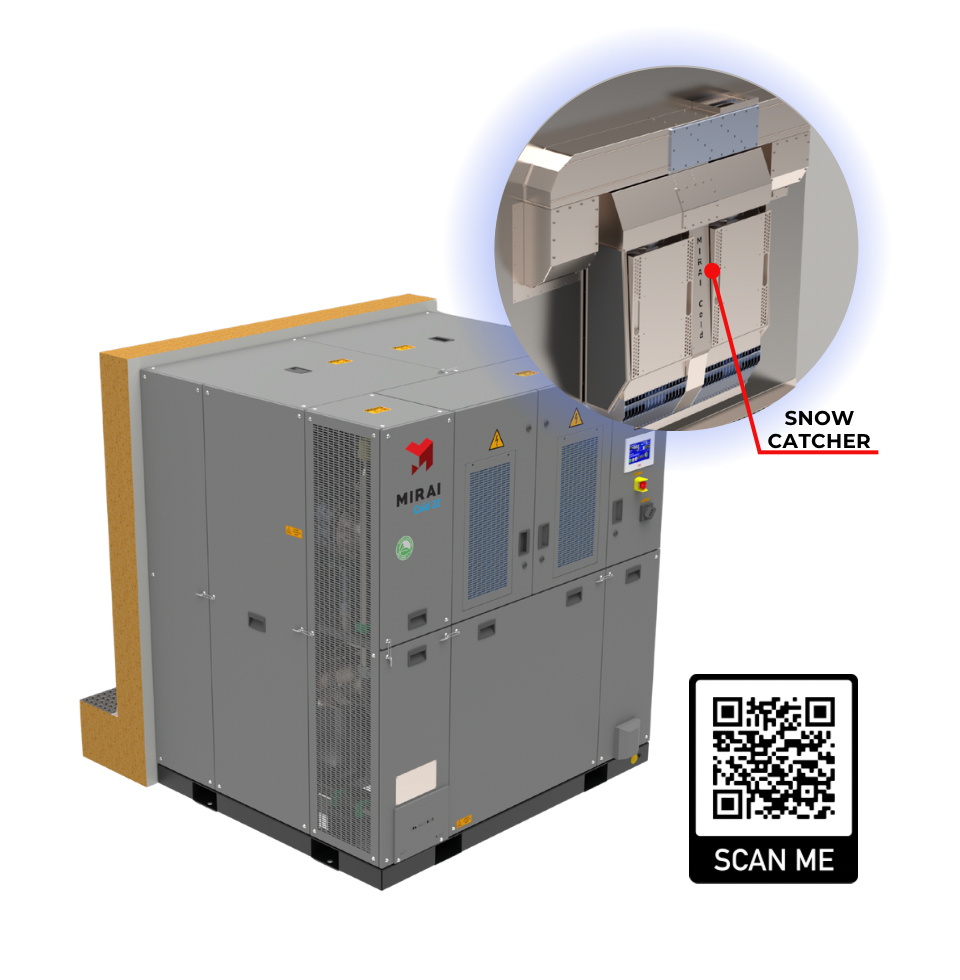
MIRAI INTEX also has a special line of products for extreme cold chain logistics and biosample preservation called the ULT SPACE COOLER series. These units are made to work reliably in temperatures between -40°C and -130°C. They are used to store pharmaceuticals, preserve vaccines, and keep sensitive biological materials safe. There are currently three models in the lineup, each designed for a different capacity need: the MC 10 O/W, the MC 15 O/A, and the MC 22 O/W. The ULT SPACE COOLER series uses the same oil-free, air-cycle technology as our MIRAI X CRYO. This makes it easy for OEM partners to quickly set up ultra-low-temperature storage solutions without having to create the core refrigeration technology themselves.
How to Select the Right Refrigeration Cycle
The temperature range for the process impacts the various cycle possibilities. Regular vapor compression works well at temperatures above −40°C. For temperatures between −40°C and −80°C, you can employ cascade systems or single-stage designs that are built for this purpose. When the temperature goes below −80°C, air-cycle and other methods that don't need vapor compression become more useful.
Most technologies can manage stable loads, but systems that can take a wide range of loads, like inverter-driven compressors, function well with loads that change a lot.
- Regulatory environment: The restrictions that are in place now and those that are projected to be in place in the future may make natural refrigerants or closed-loop systems with little charge more desirable.
- Cost of energy: When you undertake a lifecycle cost study, you should look at how efficient the system is at both full and half load. You should also think about local utility rates and demand charges.
- Ability to keep running: Skilled technicians are needed for complex cascade systems, although simpler architectures may function better in regions with few resources or that are hard to reach.
- Integration needs: The choice of technology depends on aspects like how much space is available, how well it can handle heat, and how well it works with existing systems.
Conclusion
Engineers can make smart choices about industrial cooling systems if they know how the refrigeration cycle works, whether it's the traditional vapor compression cycle or the new air-cycle technology. The basic ideas behind heat transfer, phase change, and thermodynamic work are the same for all technologies, but how they are used is very different.
The industry is moving away from traditional methods as temperature demands become more extreme and environmental rules become stricter. MIRAI INTEX is at the cutting edge of this field, creating solutions that push the limits of what's possible in industrial refrigeration while having the least impact on the environment.
We invite you to look into our engineering solutions for applications that need very low temperatures, high reliability, or long-term operation.